
"Dark" Debate
By: Kameron McBride
Clearly
“Zero Dark Thirty” was going to be controversial upon release. One does not
simply make a film about the manhunt for Osama Bin Laden without attracting at
least a little scrutiny. The sort of criticism tossed at the film for its use
of torture, however, seems to contain more venom than maybe the film deserves.
(Side
Note: there are a few spoilers here)
From what
I understand, some critics of the film point out that the story shows “enhanced
interrogation techniques” (torture) working to far greater effect than they did
than in the actual hunt for Usama Bin Laden while other suggest that the film
actually endorses the use of torture.
The first
group even counts a few senators—including John McCaine—who sent a letter to
the CEO of Sony expressing their disappointment at the inaccuracy of the
depiction of torture in the film.
This is
silly.
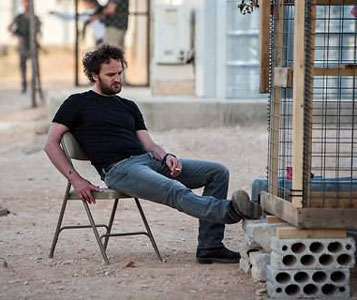
I think
the film is depicting torture occurring as a step in the search for Bin Laden
without really taking a side. There aren’t didactic explanations of whether the
torture is effective but there also aren’t scenes where we clearly see torture
working. In fact the film goes to lengths to show that torture is not working
well at all.
For
instance, another bombing occurs while they are torturing the first detainee
they capture, meaning the torture wasn’t effective enough to help stop that
bombing in time.
The
torture also exclusively occurs for about the first forty–five minutes of the
film. The one name they manage to extract through torture—“Abu Ahmed,” one of
Bin Laden’s couriers—gets them nowhere for several years in the film until they
discover his real name in a stack of papers. Most of the information they
discover, in fact, occurs during the torture–free second and third acts. I think
it’s safe to assume the film believes torture is not the best method for
extracting information.
So to
this first argument I would say that the film doesn’t depict torture as an
effective method and condenses a detail to get the plot moving. I don’t think
this is morally suspect or a disservice to the people working on the case, in
the end we see it’s through hard investigation that Bin Laden was ultimately
killed.

The other
big criticism suggests that the film itself endorses torture. Very smart people
such as Marjorie Cohn of the Huffington Post or Stuart Klawans of The Nation
posit that the film invites the viewer to see torture as an acceptable method
and even the film sets up torture as a vicarious experience for the viewer.
This
isn’t just silly; it’s plain wrong.
First of
all a film showing the brutal acts of torture in such a visceral manner would
not be endorsing using torture. The torture scenes don’t give us any sort of
vindication form the torture, there’s no thrill to be experienced. Rather, as
an audience we’re clearly supposed to be repulsed. Why would a film endorsing
torture invite us to be repulsed by it? Simply, it wouldn’t.
It’s also
important to note how these scenes are filmed—in particular the very first one.
Clearly we are expected to see the detainee as helpless and we sympathize with
him. Dan (Jason Clarke)—the agent torturing this man—is filmed as a violent
oppressor, we aren’t invited to sympathize with him whatsoever during these
scenes.
It’s also
not as though there are any scenes where the detainees finally break down
crying and plead not to be tortured anymore and they surrender key information.
No, there is nogood–triumphing–over–evil in these scenes, just more confusion. Even towards the end Dan says the
information they get from the “enhanced interrogation” yields only a “soft
sixty percent” chance that they will find Bin Laden, making him the most
pessimistic person in the room.
How these
critics extracted a pro–torture slant from these scenes is beyond me because I
just don’t see it.
Finally, I think
the important point is this: enhanced interrogation was used while looking for
Bin Laden and “Zero Dark Thirty” depicts this happening. Does it come out and
denounce torture? No, but it also doesn’t show torture clearly working and
shows other methods as more effective. Is this too subtle way of depicting
torture as ineffective? I don’t think so; it’s just showing that torture
happened, which it unquestionably did.
Ultimately “Zero
Dark Thirty” is a great, important and thought–provoking film. The
effectiveness of torture is one of many issues embedded in the film and it
shouldn’t be the one to overshadow all others.

No comments:
Post a Comment