★ 1/2

By: Kameron McBride
Most movies that have issues of tone struggle by going back and forth between two extremes within the film itself. Abraham Lincoln: Vampire Hunter actually only has this problem once: between reading the title and seeing the film itself. However, this proves to be a pretty big issue itself.
Say "Abraham Lincoln: Vampire Hunter" out loud. Hard to say it without feeling silly right? And yet this film is meant for us to, without doubt, take it seriously. And yet, how do we take Lincoln performing what can only be called "axe–fu" seriously? How can we take anything dealing with this movie seriously.
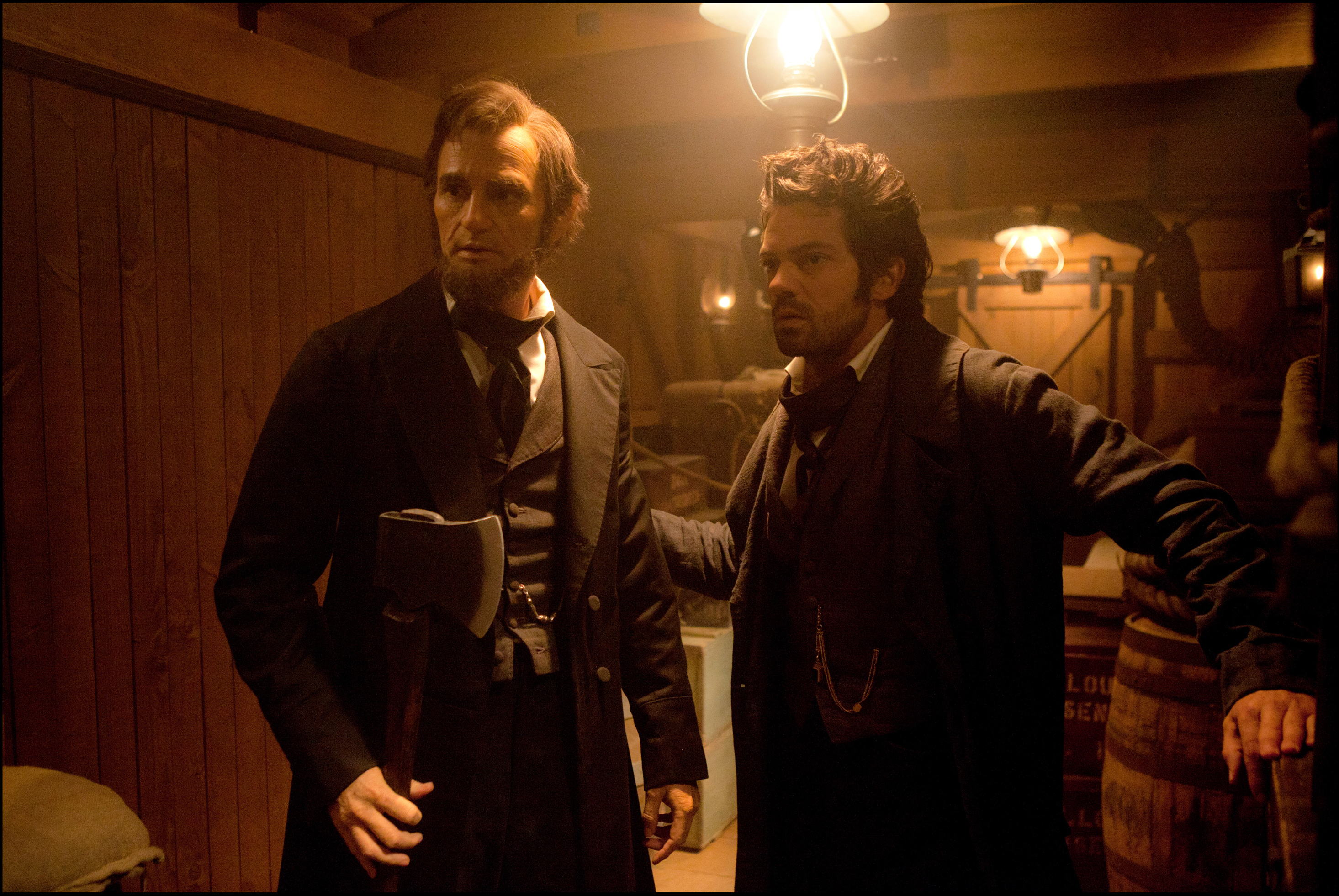
I even like Seth Graham–Smith—who wrote the novel upon which the film is based and the screenplay—he's a great follow on Twitter and Pride and Prejudice and Zombies is actually a pretty neat idea. With this film, however, I think the kitsch factor isn't as well done here and ultimately I think the film suffers for it.
The film opens with Lincoln's mother dying at the hands of a vampire while he is young. As a young man Lincoln (Benjamin Walker) seeks revenge on the vampire, yet finds he cannot destroy it. He is taken up by Henry Sturges (Dominic Cooper) who is a man adapt at killing vampires. Essentially he is the Whistler to Lincoln's Blade.
Lincoln begins traveling around the midwest, killing vampires as he goes. Why doesn't Henry help him you might ask? Well it's not giving too much away to tell you he is a vampire and as we learn, the dead can't kill the dead.
But why can't the dead kill the dead? When Henry tries to stab another vampire and invisible wall prevents him from piercing it so the obvious question is who enforces this wall? How does this make any sense at all?
Anyhow we see Lincoln continue to ascend as he tries to balance his vampire–huntin' with his political aspirations. This may seem like a lean plot summary but honestly there's precious little going on in this film that can't be revealed by the title on its own.
I actually think this would have made a far more effective video game. The action already looks like a video game, the structure of the story fits a video game far better than a film. We're getting just enough explanation to get us to the next action scene and the length of the action scenes far outweigh any sort of character development. It feels like cutscenes during a game, as if director Timur Bekmambetov (Wanted) was afraid our interest might wane if more than two seconds pass without some overtly stylish action scene is thrown up on screen.

And on those action scenes, they happen to be the really annoying ones that flash around so quickly that spacial clarity is rendered utterly useless. The camera moves in jumps and starts, never giving us enough time to appreciate the space we're in. Some of these are spectacular while others—specifically a fight between Lincoln and a vampire while running amidst a stampede of horses—look pretty stupid overall.
Beyond this, the most troubling issue with this movie is how far it is willing to dilute the issue of slavery itself. It takes what is an enormously complicated and troubling issue and waters it down into a issue of men fighting vampires. Whether intentional or not, this device trivializes what was the most trying time in our nation's history.
Essentially to enjoy Abraham Lincoln: Vampire Hunter you don't have to merely "not think about it too hard" you have to shut your brain down entirely. Sure there are some very interesting fight sequences but I don't think these outweigh the lack of tact when handling a film that takes itself too seriously while not taking the subject matter it borrows from nearly seriously enough.

No comments:
Post a Comment